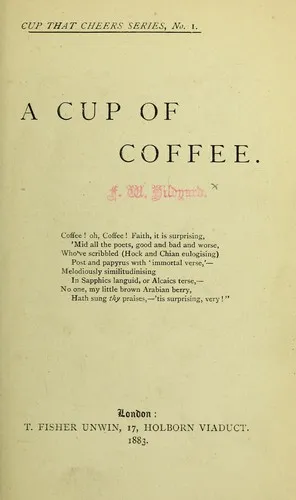
Why You Need Coffee & Tea Historical Archives: Cultivation, Chemistry & Cups
The ultimate guide and reasoning behind the Coffee & Tea Historical Archives: Cultivation, Chemistry & Cups.
Historical archives of coffee and tea are indispensable for understanding their cultivation, chemical properties, and cultural significance. These archives provide a comprehensive framework for analyzing the evolution of these beverages, their impact on society, and the scientific principles governing their composition.
Historical Context of Coffee and Tea
The historical significance of coffee and tea extends beyond mere consumption. Both beverages have shaped economies, influenced social structures, and catalyzed cultural exchanges. Coffee originated in Ethiopia, with its cultivation documented as early as the 15th century. The beverage spread to the Arabian Peninsula, where it became integral to social life. In contrast, tea's origins trace back to ancient China, with references dating to the Shang dynasty (1600-1046 BCE).
The introduction of coffee to Europe in the 17th century marked a pivotal moment. Coffeehouses emerged as centers for intellectual discourse, challenging the status quo. Tea, on the other hand, became a symbol of British colonial power, with the East India Company monopolizing its trade. The historical archives of these beverages reveal the intricate web of trade routes, colonial policies, and cultural exchanges that shaped their global presence.
Curator's Note: Coffee & Tea Historical Archives: Cultivation, Chemistry & Cups
The texts discussed here are part of a curated collection. You can access the complete set of primary sources directly from our vault.
Cultivation Techniques and Agricultural Practices
The cultivation of coffee and tea involves distinct agricultural practices, each with its own historical evolution. Coffee plants thrive in specific climates, requiring altitude and shade. The Arabica variety, known for its superior flavor, dominates global production. Historical archives document the transition from wild harvesting to organized plantations, particularly in the Americas during the 18th century.
Tea cultivation, conversely, is characterized by meticulous processes. The Camellia sinensis plant requires specific soil conditions and climate. Historical records detail the development of tea gardens in China and later in India, where British colonial interests led to the establishment of large-scale plantations. The archives provide insights into the labor practices, including the exploitation of workers, that underpinned these agricultural systems.
Chemical Composition and Health Implications
The chemical properties of coffee and tea are critical to understanding their effects on human health. Both beverages contain caffeine, a stimulant that affects the central nervous system. The chemical structure of caffeine, along with other compounds such as polyphenols and antioxidants, contributes to the health benefits attributed to these drinks.
Historical archives reveal the evolution of scientific understanding regarding these compounds. Early studies focused on the stimulating effects of caffeine, while contemporary research explores its potential health benefits, including reduced risk of certain diseases. The archives serve as a repository of knowledge, documenting the progression of research methodologies and findings over time.

Coffee & Tea Historical Archives: Cultivation, Chemistry & Cups
Unlock 47 hard-to-find books covering Coffee And Tea. We've digitized and organized these rare manuals so you have offline access to invaluable, practical knowledge that modern platforms ignore.
Cultural Significance and Social Impact
The cultural significance of coffee and tea transcends their roles as mere beverages. Coffeehouses became venues for political discourse during the Enlightenment, while tea drinking rituals in various cultures reflect social hierarchies and customs. The historical archives provide a lens through which to examine these cultural practices.
In Japan, the tea ceremony embodies principles of harmony and respect, while in England, afternoon tea signifies social status. The archives document the evolution of these practices, highlighting how coffee and tea have been intertwined with cultural identity. The impact of these beverages on social interactions and community building is evident in historical records, illustrating their role in shaping societal norms.
Economic Implications and Global Trade
The economic implications of coffee and tea are profound. Both commodities have driven global trade networks, influencing economies and shaping geopolitical landscapes. The historical archives detail the rise of coffee and tea as cash crops, their role in colonial economies, and the subsequent impact on indigenous populations.
The Opium Wars in the 19th century exemplify the intersection of trade and conflict, with tea being a central commodity. Historical records reveal how the British Empire leveraged tea trade to exert influence over China, leading to significant socio-economic consequences. The archives provide a comprehensive understanding of the economic forces at play, illustrating the complexities of global trade dynamics.
Modern Implications and Sustainability
In contemporary society, the implications of coffee and tea extend into discussions of sustainability and ethical consumption. The historical archives serve as a foundation for understanding current practices and challenges in the industry. Issues such as climate change, fair trade, and organic farming are increasingly relevant.
The archives document the evolution of consumer awareness regarding the environmental impact of coffee and tea production. Historical records reveal the shift from conventional farming methods to sustainable practices, emphasizing the importance of preserving biodiversity and supporting local communities. The analysis of these trends is critical for future developments in the industry.
framework: The Indispensable Value of Historical Archives
The historical archives of coffee and tea are essential for a comprehensive understanding of their cultivation, chemistry, and cultural significance. They provide a structured framework for analyzing the evolution of these beverages and their impact on society. The depth of knowledge contained within these archives is invaluable for researchers, historians, and industry professionals alike.
The archives serve not only as a repository of historical data but also as a guide for future practices in cultivation, trade, and consumption. The insights gained from these records are framework for addressing contemporary challenges and ensuring the sustainability of coffee and tea industries.
Subject Collection
The texts analyzed in this article are available in our curated collection.