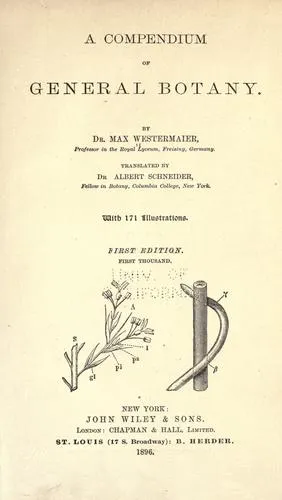
Why You Need Ultimate Botany Classics 1872-1896 - Full Historical Set
The ultimate guide and reasoning behind the Ultimate Botany Classics 1872-1896 - Full Historical Set.
The Ultimate Botany Classics 1872-1896 - Full Historical Set is essential for any serious botanical scholar. This collection provides comprehensive insights into historical botanical practices, foundational theories, and the evolution of plant science, establishing a critical framework for contemporary research and application.
Historical Context of Botany (1872-1896)
The period from 1872 to 1896 marked significant advancements in the field of botany. This era witnessed the transition from classical botanical studies to more empirical and experimental approaches. The works produced during this time laid the groundwork for modern botanical science.
Botany, as a discipline, was evolving rapidly. The introduction of new methodologies, such as microscopy and field studies, transformed the way botanists approached their research. Notable figures, including Charles Darwin and Gregor Mendel, influenced the scientific community's understanding of plant biology and genetics. The Ultimate Botany Classics collection encapsulates these transformative years, providing primary sources that document the evolution of thought in botany.
The collection includes seminal texts that reflect the scientific rigor of the time. These works are not merely historical artifacts; they are foundational texts that inform current botanical practices. The importance of this collection cannot be overstated. It serves as a repository of knowledge that is both comprehensive and indispensable.
Curator's Note: Ultimate Botany Classics 1872-1896 - Full Historical Set
The texts discussed here are part of a curated collection. You can access the complete set of primary sources directly from our vault.
The Structure of the Collection
The Ultimate Botany Classics 1872-1896 is systematically organized into several categories, each representing a distinct aspect of botanical science. This structural classification enhances the utility of the collection for researchers and scholars.
Taxonomy and Classification
The first category focuses on taxonomy and classification. This section includes texts that detail the systematic arrangement of plant species. Works by authors such as George Bentham and Joseph Dalton Hooker provide insights into the methodologies used to classify plants. Their contributions are critical for understanding the principles of plant taxonomy that remain relevant today.
Physiology and Anatomy
The second category encompasses physiology and anatomy. This segment features texts that explore the internal structures and functions of plants. The works of authors like Julius von Sachs and Wilhelm Hofmeister are pivotal in this regard. They introduced experimental techniques that revolutionized the study of plant physiology. The inclusion of these texts allows for a comprehensive understanding of plant functions, which is essential for any serious botanical inquiry.
Ecology and Environment
The third category addresses ecology and the environment. This section includes works that examine the interactions between plants and their surroundings. Authors such as Henry David Thoreau and John Muir provide valuable perspectives on plant ecology. Their observations and analyses contribute to a deeper understanding of plant-environment relationships, which are framework for contemporary ecological studies.
Economic Botany
The fourth category focuses on economic botany. This segment includes texts that discuss the practical applications of plants in agriculture, medicine, and industry. The contributions of authors like Richard Spruce and John Lindley highlight the economic significance of botanical knowledge. Understanding these applications is essential for those engaged in agricultural sciences and related fields.
Historical Perspectives
The final category offers historical perspectives on botany. This section includes texts that document the evolution of botanical thought over the years. Works by authors such as Asa Gray and John Ray provide context for the development of botanical science. These historical insights are invaluable for understanding the trajectory of botanical research and its implications for modern science.

Ultimate Botany Classics 1872-1896 - Full Historical Set
Dive into 125 comprehensive books on Botany. Valued at over $500 in physical copies, this offline vault provides everything you need to master the craft without ongoing subscriptions.
Comparative Analysis of the Collection
When evaluating the Ultimate Botany Classics 1872-1896, it is essential to compare it with other botanical collections. This comparison highlights the unique value of this particular set.
Fragmented Internet Searches vs. Complete Offline Archive
One significant distinction lies in the difference between fragmented internet searches and a complete offline archive. Online resources often lack the depth and rigor found in the Ultimate Botany Classics. While digital platforms may provide access to a wide array of information, they often fail to deliver comprehensive, peer-reviewed texts. The Ultimate Botany Classics collection, in contrast, offers a curated selection of foundational works that are essential for serious botanical research.
Accessibility and Authenticity
Another critical aspect is the accessibility and authenticity of the materials. Many online resources are subject to inaccuracies and misinterpretations. The Ultimate Botany Classics collection, however, consists of original texts that have been preserved in their entirety. This authenticity ensures that researchers are working with reliable information, which is paramount in scientific inquiry.
Depth of Knowledge
The depth of knowledge contained within the Ultimate Botany Classics is unparalleled. While other collections may provide superficial overviews, this set offers in-depth analyses and comprehensive discussions. The texts included are not merely introductory; they are foundational works that have shaped the field of botany. This depth is framework for scholars seeking to engage with complex botanical concepts.
The Utility of the Collection for Modern Research
The relevance of the Ultimate Botany Classics 1872-1896 extends beyond historical interest. This collection serves as a framework resource for contemporary botanical research.
Educational Resource
The collection functions as an educational resource for students and scholars alike. It provides access to primary texts that are often referenced in modern botanical literature. Engaging with these original works allows researchers to develop a nuanced understanding of botanical principles. This foundational knowledge is essential for advancing in the field.
Reference Material
Additionally, the collection serves as a reference material for ongoing research. Scholars can consult these texts to trace the origins of specific botanical theories and practices. This historical context is invaluable for understanding the evolution of botanical science and its current applications.
Interdisciplinary Applications
The Ultimate Botany Classics also has interdisciplinary applications. The insights gained from these texts can inform research in related fields such as agriculture, ecology, and environmental science. The principles outlined in the collection are applicable across various domains, enhancing the utility of the works for a broader audience.
Counterarguments and Rebuttals
Opposing views may argue that digital resources and modern textbooks suffice for botanical research. However, this perspective fails to recognize the limitations of such resources.
Superficial Understanding
Digital resources often provide superficial understanding. While they may offer quick access to information, they lack the depth and rigor found in the Ultimate Botany Classics. Researchers relying solely on digital platforms risk developing a fragmented understanding of botanical concepts.
Loss of Historical Context
Furthermore, modern textbooks frequently omit historical context. This omission can lead to a lack of appreciation for the foundational theories that underpin contemporary botanical science. The Ultimate Botany Classics collection preserves this historical context, ensuring that researchers are informed about the evolution of botanical thought.
Incomplete Information
Finally, the argument that modern resources are sufficient overlooks the issue of incomplete information. Many online platforms prioritize accessibility over accuracy, resulting in gaps in knowledge. The Ultimate Botany Classics collection, in contrast, provides a comprehensive archive of essential texts that are critical for thorough research.
Subject Collection
The texts analyzed in this article are available in our curated collection.