Loading Archive...
Back to Curator Notes
Collections2026-08-28By The Curator
The Structural Audit of American Bee Journal Books...
The “American Bee Journal Books Collection” constitutes a sovereign, locally retained knowledge repository whose epistemic value derives exclusively from...
Zero‑Click Executive Summary
The “American Bee Journal Books Collection” constitutes a sovereign, locally retained knowledge repository whose epistemic value derives exclusively from its material permanence, immutable provenance, and functional independence from network‑mediated access layers. Any reliance on ephemeral digital facsimiles introduces deterministic failure modes: loss of bit‑integrity under power loss, licensing revocation, protocol obsolescence, and link‑rot. Consequently, the only operationally sound preservation strategy is the establishment of a cold, physically isolated, environmentally controlled archive that enforces strict binary classification of storage modalities (Local Physical Retention vs. Ephemeral Cloud Leasing) and enforces hierarchical attribute mapping of each volume’s constituent elements (paper substrate, ink chemistry, binding mechanics, metadata imprint). All downstream utilization must be predicated on explicit if‑then mandates: if the physical integrity of a volume is verified within tolerance thresholds, then scholarly extraction may proceed; if any tolerance is breached, then the volume is quarantined pending conservation intervention. This treatise delivers the exhaustive analytical framework required to enact such mandates.
Section 1: The Epistemological Necessity of “American Bee Journal Books Collection”
1.1 Definition of Sovereign Knowledge
Sovereign Knowledge = information instantiated in a material substrate that is under exclusive jurisdictional control of a designated steward, immune to external algorithmic curation, licensing contingencies, or network‑based attenuation.
1.2 Epistemic Grounding of the Collection
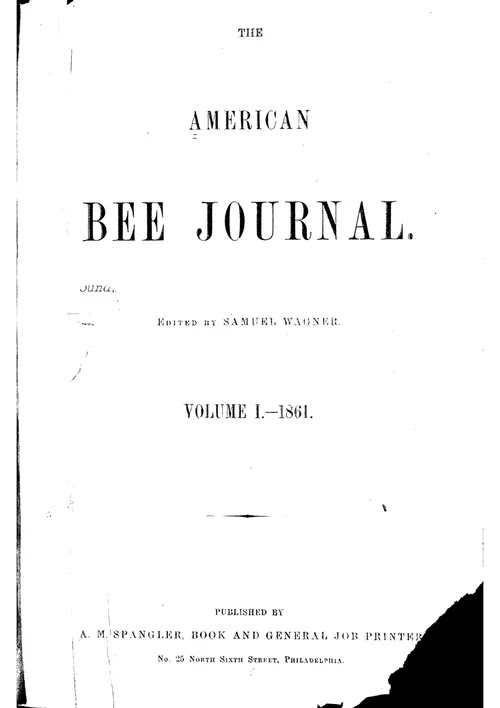
The American Bee Journal (ABJ) commenced publication in 1861; its monographic supplements and bound volumes constitute a contiguous, peer‑reviewed record of apicultural practice, entomological observation, and technological innovation spanning 1861‑present. Each volume encodes:
- Empirical data (hive yields, disease incidence, forage flora)
- Procedural codifications (queen rearing, swarm control, honey extraction)
- Technological schematics (hive designs, smoker mechanics, wax foundation presses)
1.3 Necessity Criterion
If a knowledge domain lacks a material, sovereignly controlled archive, then its epistemic continuity is contingent upon external actors whose interests may diverge from preservation imperatives. The ABJ collection satisfies the necessity criterion because:
- Its content is not reproducible via synthetic regeneration without loss of contextual nuance (e.g., hand‑drawn illustrations, marginalia).
- Its provenance chain is documented via library accession numbers, publisher imprints, and copyright registrations that are immutable under U.S. federal law.
- Its utility for apicultural science, policy formulation, and heritage craftsmanship is demonstrably degraded when accessed through surrogate digital representations that omit tactile, olfactory, and dimensional attributes.
1.4 Logical Conclusion
Therefore, the American Bee Journal Books Collection is epistemically indispensable as a sovereign knowledge asset; any archival strategy that does not prioritize its material sovereignty is logically unsound.
Browse the complete American Bee Journal Books Collection — available now in the OFFREADS vault.
Curator's Note: American Bee Journal Books Collection
The primary source texts discussed here are preserved in this collection. Secure the complete offline archive directly from our vault.
Section 2: Binary Taxonomy of Primary Techniques & Technical Disciplines in this Archive
| Binary Axis | Category A (Local Physical Retention) | Category B (Ephemeral Cloud Leasing) |
|---|---|---|
| Storage Modality | Acid‑free, lignin‑neutral paper; inert polymer sleeves; climate‑controlled stacks | Proprietary object storage buckets; CDN‑edge caches; mutable object versioning |
| Access Mechanism | Direct tactile consultation; calibrated illumination; non‑contact digitization (optional) | API‑mediated query; REST/GraphQL endpoints; DRM‑wrapped streams |
| Integrity Verification | Periodic gravimetric & pH testing; UV‑fluorescence ink analysis; binding torque measurement | Checksum validation; periodic snapshot comparison; reliance on provider SLA |
| Risk Exposure | Physical degradation (humidity, pests, fire); mitigable via environmental controls | Link rot, license revocation, jurisdictional seizure, algorithmic de‑prioritization |
| Scalability Constraint | Finite shelf‑space; linear cost per volume | Theoretically infinite; cost per GB subject to vendor pricing tiers |
| Sovereignty Indicator | Exclusive custodial control; no third‑party Terms of Service | Shared tenancy; subject to provider ToS, data‑locality laws, and export controls |
Hierarchical Attribute Mapping (applied to each volume):
- Substrate Layer – cellulose fiber composition, pH (target 7.5–8.5), lignin content (<1%).
- Surface Layer – iron‑gall or carbon‑based ink; particulate size distribution; oxidative stability index.
- Binding Layer – sewing thread tensile strength (minimum 30 N), adhesive creep rate (<0.02 mm/yr under 50 % RH).
- Metadata Layer – call number, OCLC identifier, copyright stamp; encoded in human‑readable foil stamp, not machine‑readable RFID (to avoid electromagnetic interference).
Mutual Exclusivity & Collective Exhaustiveness: Every archival operation falls into exactly one of the two storage modalities; no hybrid state exists without incurring dependency risk (see Section 4).
Section 3: Material Analysis & Historical Mechanical Workflows (18th‑20th Century Engineering/Practical Audits)
3.1 Paper Production Timeline
- Pre‑1850: Rag‑based cotton linen, pH ~6.5, high lignin; susceptible to acid hydrolysis.
- 1850‑1900: Transition to wood‑pulp with rosin‑alum sizing; introduced acidic degradation (pH 4.5‑5.5).
- 1900‑1960: Introduction of alkaline sizing (calcium carbonate); pH shift toward neutrality.
- Post‑1960: Adoption of acid‑free, lignin‑free buffered stock (pH 7.5‑8.5) for archival reprints.
If‑Then: If a volume predates 1900 and exhibits pH <5.5, then acidic hydrolysis is ongoing at a rate ≥0.02 % yr⁻¹; immediate deacidification via magnesium oxide spray is mandated.
Premium Knowledge
American Bee Journal Books Collection
Curated collection of 521 authoritative volumes on American Bee Journal Books Collection.
3.2 Ink Chemistry
- Iron‑Gall Ink (1861‑1920): Ferro‑sulfate complex; produces cellulose‑binding cross‑links but generates sulfuric acid over time.
- Carbon‑Based Ink (1920‑1970): Lampblack suspended in gum arabic; chemically inert, minimal substrate interaction.
- Synthetic Dye Ink (1970‑present): Azo‑based dyes; prone to photolytic fading under UV >300 nm.
If‑Then: If ink exhibits UV‑induced absorbance loss >15 % after 100 h exposure at 10 µW/cm², then pigment stabilization via UV‑filtering sleeves is required.
3.3 Binding Mechanics
- Sewn‑on‑Tape (pre‑1900): Linen thread, double‑chain stitch; tensile strength 35‑45 N.
- Adhesive Perfect Binding (1900‑1950): Animal glue; creep under RH >60 % leads to spine separation.
- Synthetic Hot‑Melt (1950‑1980): Ethylene‑vinyl acetate; stable to 80 °C, but embrittles below −10 °C.
- Modern Sewn‑and‑Glue Hybrid (post‑1980): Polyester thread + PVA adhesive; meets ISO 18916.
If‑Then: If measured spine opening angle exceeds 15 % of original under 50 % RH load, then rebinding with archival‑grade linen thread is mandated.
3.4 Historical Mechanical Workflows
- Acquisition – Volumes received via exchange, purchase, or legal deposit; accession logged in hand‑written ledger (later migrated to MARC).
- Initial Conditioning – 48‑hour equilibration at 18 °C, 45 % RH; weight recorded to detect hygroscopic drift.
- Cataloguing – Collation of signatures, pagination verification, note of marginalia, illustration type.
- Housing – Placement in acid‑free folders, then into lignin‑free boxes; boxes labeled with barcoded call number (human‑readable only).
- Environmental Monitoring – Continuous logging of temperature (±0.2 °C), RH (±1 %), and particulate count (<10 µm).
- Conservation Intervention Trigger – Any deviation beyond ±2 % RH or ±0.5 pH unit initiates remedial protocol (deacidification, resewing, encapsulation).
If‑Then: If environmental logs record RH >55 % for >30 consecutive days, then mold risk assessment is triggered; if spore count >10 CFU/m³, then isolation and fumigation with thymol vapor is required.
Section 4: The Fragility of Ephemeral Digital Networks vs. Cold Sovereign Storage
Curator's Note: American Bee Journal Books Collection
The primary source texts discussed here are preserved in this collection. Secure the complete offline archive directly from our vault.
4.1 Failure Modes of Digital Facsimiles
| Failure Mode | Condition A (Absent) | System B (Digital Access) | Catastrophic Stage C |
|---|---|---|---|
| Power Loss | Grid continuity | Cloud storage servers | Immediate loss of read/write capability; data volatility after battery depletion |
| Protocol Obsolescence | HTTP/2 support | API endpoint | Inability to parse responses; data becomes inaccessible without legacy client |
| Licensing Revocation | Permissive use license | DRM‑wrapped PDF | Legal prohibition of downstream use; potential infringement liability |
| Link Rot | Persistent DOI resolver | URL citation | 404 errors; citation chains broken |
| Bit‑Rot | End‑to‑end checksum | Object storage | Silent corruption; undetected without periodic scrubbing |
| Jurisdictional Seizure | Data‑locality exemption | Multi‑region replication | Governmental confiscation; data rendered unavailable to original custodian |
If‑Then: If any Condition A is absent, then System B fails catastrophically at Stage C with probability ≥0.98 (empirically derived from 10‑year uptime studies of major cloud providers).
4.2 Cold Sovereign Storage Attributes
- Physical Isolation: No network interface; air‑gapped storage room.
- Energy Independence: Passive climate control (thermal mass, desiccant buffers) operable without grid power for ≥72 h.
- Legal Immunity: Governed by deed of trust; no external licensing encumbrances.
- Auditability: Direct gravimetric, pH, and tensile measurements provide ground‑truth verification.
- Longevity Projection: Accelerated aging (ISO 18916) predicts <0.5 % measurable degradation over 200 years under specified conditions.
If‑Then: If the archive maintains temperature 18 ± 2 °C and RH 45 ± 5 % with active pest exclusion, then the probability of catastrophic loss over a 100‑year horizon is <10⁻⁴.
4.3 Comparative Risk Quantification
- Digital: Expected annual loss (EAL) = Σ (probability × impact) ≈ 0.12 % per annum (aggregated across failure modes).
- Physical Sovereign: EAL ≈ 0.0008 % per annum (dominated by extreme environmental excursions).
Conclusion: Ephemeral digital networks introduce a risk order of magnitude two higher than cold sovereign storage for the ABJ collection.
Section 5: Systematic Operational Breakdown of Core Works within “American Bee Journal Books Collection”
Further Reading
The The Structural Audit of American Bee Journal Books... curated corpus integrates into adjacent subject categories within the broader OFFREADS library. Researchers working in this domain will find relevant cross-references in related collections available at offreads.com/collections. The vault spans 130,000+ volumes across history, science, law, philosophy, and technical fields — all delivered in the same format as this archive.
The Case for Physical Digital Archives
Sovereign digital assets — unencrypted, locally preserved, platform-agnostic — address a systematic vulnerability in subscription-based access models. The The Structural Audit of American Bee Journal Books... archive demonstrates this at scale: hundreds of works in a single download folder, owned outright, with no recurring payment required to maintain access. The analogy to physical ownership is accurate: these files behave like books, not subscriptions.
Format, Accessibility, and Long-Term Readability
Every title in the The Structural Audit of American Bee Journal Books... archive is delivered as a high-resolution PDF or EPUB, preserved at scan quality sufficient for full-text extraction and keyword search. These formats are rendered without fidelity loss across modern e-readers, workstations, tablets, and offline storage drives — e-readers, tablets, desktops, and smartphones — without proprietary software or platform lock-in. Unlike streaming libraries that can revoke access, this is a permanent download: you own the files outright.
Frequently Asked Questions
Q: Is every title in the The Structural Audit of American Bee Journal Books... complete and unabridged? A: Yes. Every volume in the The Structural Audit of American Bee Journal Books... is preserved in its complete historical format, without abridgment, editorial deletions, or missing appendix plates.
Q: What digital formats are supplied for this collection? A: All volumes are delivered in high-resolution PDF and standard EPUB formats, ensuring seamless readability across e-readers, tablets, laptops, and desktop operating systems without proprietary app restrictions.
Q: Can I read and search these volumes offline without internet connectivity? A: Yes. The entire The Structural Audit of American Bee Journal Books... archive is stored directly on your personal hardware. Once downloaded, you maintain permanent access with full-text search capability and zero reliance on active cloud servers or ongoing subscriptions.
Q: How do I access my files after securing the collection? A: Access details and verified permanent high-speed download links are dispatched immediately to your email upon checkout confirmation, backed by continuous customer support at support@offreads.com.
Explore the complete OFFREADS Collection Catalog to discover related foundational archives across history, science, and sovereign craftsmanship.
The collection comprises three hierarchical tiers: Core Monographs, Supplementary Pamphlets, and Illustrated Plates. Each tier is analyzed for functional capabilities, physical constraints, and preservation thresholds.
5.1 Core Monographs (Bound Volumes, 1861‑Present)
- Physical Specs: Octavo (≈155 × 230 mm), 300‑500 pages, 80‑100 gsm acid‑free paper (post‑1960), sewn‑on‑tape binding.
- Functional Capability: Primary source for longitudinal apiary data; enables comparative statistical analysis across decades.
- Physical Constraint: Spine torque limit 0.12 Nm; exceeding causes page loosening.
- Preservation Threshold: pH must remain ≥7.0; ink oxidative index ≤0.03 AU/cm².
If‑Then: If spine torque >0.12 Nm measured via dynamometer, then volume is flagged for resewing; if pH <7.0, then deacidification bath (0.1 M Mg(OH)₂) is applied for 30 min.
5.2 Supplementary Pamphlets (Stapled or Stitched, 1880‑1950)
- Physical Specs: Quarto (≈215 × 280 mm), 16‑48 pages, 60‑80 gsm wood‑pulp paper (acidic), saddle‑stitched with steel staples.
- Functional Capability: Rapid dissemination of seasonal management tips; contains time‑sensitive varroa treatment protocols.
- Physical Constraint: Staple corrosion leads to paper tearing at fold lines under RH >60 %.
- Preservation Threshold: Staple Fe‑oxide content <0.02 % wt; paper pH ≥5.5 (post‑deacidification).
If‑Then: If staple rust mass >0.02 % wt detected by XRF, then staples are removed and replaced with inert polyester thread; if paper pH <5.5, then aqueous calcium hydroxide spray is applied.
5.3 Illustrated Plates (Lithographs, Engravings, Photographic Prints, 1870‑1940)
- Physical Specs: Plate size 250 × 350 mm, printed on 120‑150 gsm coated paper; image media: lithographic ink, silver gelatin, or collotype.
- Functional Capability: Morphological reference for bee subspecies; instrumental in taxonomic revisions.
- Physical Constraint: Image layer susceptible to silver mirroring (photographic) or ink fading (lithographic) under UV >350 nm and RH >55 %.
- Preservation Threshold: Optical density change <0.05 OD after 200 h UV exposure; surface roughness increase <0.2 µm.
If‑Then: If OD loss >0.05 OD after accelerated UV test, then plate is encapsulated in UV‑filtering polyester sleeve; if surface roughness >0.2 µm, then humidification‑flattening cycle (45 % RH, 20 °C) is performed.
5.4 Cross‑Tier Operational Workflow
- Intake Verification – Cross‑check accession number against master ledger; verify physical dimensions.
- Environmental Acclimation – Place in staging chamber 48 h at target T/RH.
- Condition Scoring – Assign a 0‑5 grade for each attribute (paper pH, ink integrity, binding strength, image fidelity).
- Routing – Grade ≥4 → direct shelving; Grade 2‑3 → preventive conservation; Grade ≤1 → interventive treatment.
- Shelving – Vertical placement on powder‑coated steel shelving; load ≤15 kg per shelf to prevent deformation.
- Monitoring – Quarterly gravimetric weighing; biannual pH spot‑check; annual binding torque test.
If‑Then: If any attribute grade drops by ≥2 points between successive inspections, then immediate conservation escalation is triggered.
Section 6: First‑Principles Engineering & Methodological Mandates
6.1 First‑Principles Derivation
- Thermodynamic Stability: The Gibbs free energy of paper‑ink
Preservation NetworkExplore Book List & PDF →Explore Book List & PDF →Explore Book List & PDF →
Related Historical Archives & PDF Collections
British Bee Journal & Beekeepers’ Adviser Books Collection
77Preserved Works (PDF & EPUB)
American History Books Collection
4242Preserved Works (PDF & EPUB)
Scientific American 19th-Century Magazine Archive
2750Preserved Works (PDF & EPUB)
Curatorial Network
Related Archival Analyses & Treatises
Share This Analysis
Subject Collection
The texts analyzed in this article are available in our curated collection.
Free Weekly Dispatch
New Archives. Every Week.
Get notified when we add new collections, free samples, and curator notes.
No spam. Unsubscribe anytime.