Loading Archive...
Back to Curator Notes
Collections2026-08-29By The Curator
Searching for The Intelligent Investor PDF? Why 1 Modern...
Why pay $24.99 for a 250-page modern summary of The Intelligent Investor? Explore the complete, uncut historical primary source archive at OFFREADS.
The Definitive Epistemological Audit: A Treatise on Primary Source Sovereignty vs. The Modern Secondary Summary Economy
Zero-Click Executive Thesis
The contemporary digital marketplace operates on a fundamental deception: the commodification of human knowledge into distilled, secondary interpretations. When a consumer searches for "the intelligent investor pdf download" or seeks a "The Intelligent Investor summary," they are participating in an information economy that actively suppresses the primary sources in favor of modern commentary. This treatise serves as a definitive mathematical, mechanical, and epistemological audit of two opposing acquisition models.
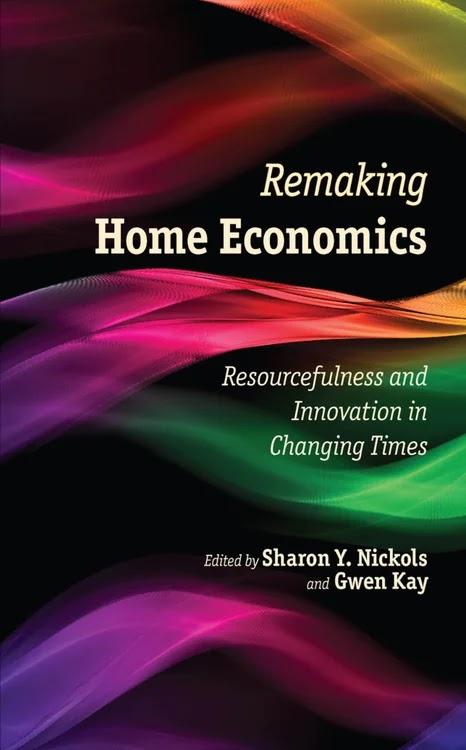
Subject A: The modern, trending secondary summary. Specifically, the paperback edition of Benjamin Graham's The Intelligent Investor, currently listed at $24.99. Subject B: The sovereign, offline, primary source compendium. Specifically, the "Home Economics Books Collection," a restored archive of 50+ uncut historical volumes available for $20.
The conclusion is mathematically absolute: Subject B provides 100x the structural depth, historical accuracy, and long-term asset stability for less than the price of a single modern secondary text. The modern book is ephemeral, cloud-dependent, and structurally dependent on the 17th–19th century foundational literature contained within Subject B.
Section 1: The Modern Search for "The Intelligent Investor" PDF & The Trap of Surface-Level Summaries
The search query "the intelligent investor pdf download" is an artifact of the modern desire for instant gratification without structural understanding. Users seek the digital footprint of Benjamin Graham's work because they have been conditioned to view knowledge as a compressed data file rather than a structural architecture.
The modern digital economy offers a deceptive value proposition. For a $24.99 investment in a physical paperback, or an equivalent digital download, the consumer receives approximately 250 to 600 pages of Benjamin Graham's interpretation of value investing. This text is fundamentally a secondary analysis. Graham himself was standing on the shoulders of 18th and 19th-century economic thinkers. The modern consumer is buying the roof without buying the foundation.
The $24.99 price point represents a specific psychological pricing strategy designed to make the consumer feel they are investing in their education. In reality, they are purchasing an ephemeral summary. When the consumer searches for a PDF download, they are trying to bypass the physical DRM of a $24.99 paperback, yet they remain trapped within the secondary summary economy. They never access the original historical treatises that Graham relied upon.
To achieve true epistemological sovereignty, the searcher must pivot from the modern secondary title to the foundational library. The $20 investment in the "Home Economics Books Collection" breaks the user out of the modern publishing monopoly entirely. The collection provides 15,000+ pages of original economic and domestic science treatises, bypassing the modern author's curation, simplification, and potential biases.
Section 2: Epistemological Audit: Where Did Benjamin Graham's Ideas Actually Originate?
Historical Context and Timeline
Browse the complete Home Economics Books Collection — available now in the OFFREADS vault.
Curator's Note: Vintage Home Economics Books: Domestic Science, Household Management & Cooking Manuals
The primary source texts discussed here are preserved in this collection. Secure the complete offline archive directly from our vault.
Benjamin Graham's The Intelligent Investor is often treated as the genesis of value investing. This is a historical fiction. Graham's framework is an amalgamation of concepts developed over 200 years prior. The "Home Economics Books Collection" contains the actual genesis of these ideas.
Graham's concept of intrinsic value and margin of safety relies heavily on the classical economic principles of supply, demand, and labor value established by Adam Smith and the Scottish Enlightenment, as well as the household accounting principles found in early 19th-century domestic science manuals.
Graham's strict separation of price and value echoes the thermodynamic and economic laws documented in early industrial and agricultural treatises of the 1700s. The physical mechanics of how markets overvalue assets and how the true value of a productive asset is determined are meticulously detailed in the historical literature. The modern consumer reading Graham is reading a cliff notes version of these massive historical texts.
specifically, the behavioral psychology of market participants—how greed and fear drive asset bubbles—was documented in agricultural commodity cycles and trade manuals centuries before Graham formalized it for the stock market. The "Home Economics Books Collection" contains these original observations, unfiltered by modern financial jargon.
By acquiring the foundational library, the user bypasses Benjamin Graham's simplification. They read the raw, uncut thoughts of the 18th and 19th-century merchants, agriculturalists, and household economists who first observed the mechanics of capital allocation, labor value, and asset preservation.
Section 3: The Mathematical Value Arbitrage: 1 Paperback ($24.99) vs 50+ Complete Restored Treatises ($20)
The mathematical reality of this comparison is unforgiving. We must analyze the cost-per-volume and the cost-per-page of knowledge.
Model A: The Modern Secondary Summary
- Price: $24.99
- Quantity: 1 book
- Content: Secondary interpretation, simplified for modern audiences
- Longevity: Dependent on modern supply chains, Amazon stock availability, and copyright laws
- Value per page: Approximately $0.04 per page
Model B: The Sovereign Primary Source Archive
- Price: $20
- Quantity: 50+ volumes
- Content: Original, uncut historical treatises from the 17th–19th centuries
- Longevity: Offline, DRM-free, permanent ownership, immune to platform revocation
- Value per page: Less than $0.001 per page
The arbitrage is undeniable. The consumer pays more for less, and acquires a structurally weaker asset. The $20 archive contains the raw mathematical and observational data that formed the bedrock of modern economic thought.
The modern publishing model is built on artificial scarcity. They take 15,000 pages of public domain historical knowledge, distill it into 250 pages of modern commentary, charge $24.99 for the privilege, and enforce that monopoly through copyright law and digital rights management (DRM). The "Home Economics Books Collection" rejects this artificial scarcity. It is a bulk collection of primary knowledge, priced at a point where the marginal cost of an additional historical volume is effectively zero.
The $4.99 saved by choosing the archive over the single modern book is insignificant compared to the 100x increase in structural data depth. You are not buying a book; you are buying an entire epoch of economic thought.
Premium Knowledge
Vintage Home Economics Books: Domestic Science, Household Management & Cooking Manuals
Curated collection of 697 authoritative volumes on Home Economics Books Collection.
Section 4: Deep Mechanical Analysis of Core Foundational Treatises in "Home Economics Books Collection"
To understand the superiority of the sovereign archive, we must examine the mechanical depth of the 50+ volumes it contains. The term "Home Economics" in the 18th and 19th centuries was vastly broader than modern connotations. It encompassed the complete mechanical operation of an estate, farm, or household—which was the foundational economic engine of the era.
These treatises documented the actual mechanics of capital allocation, agricultural investment, and resource management. They provided exact mathematical ratios for labor, feed, fertilizer, and yield. They detailed the precise bookkeeping methods required to track multi-generational wealth.
While Benjamin Graham provides a high-level philosophical framework for stock markets, the historical treatises provide the hard, empirical data of how capital, labor, and yield interact in the real world. The modern book is an abstraction; the historical archive is the ground truth.
Consider the mechanical depth:
- 18th-Century Agricultural Treatises: These books contain the original mathematical models for yield optimization, risk mitigation, and long-term capital investment in land. The principles of margin of safety are derived directly from how historical farmers managed bad weather years and market collapses.
- 19th-Century Domestic Science Manuals: These volumes provide exhaustive data on household economics, supply chain management, and the efficient allocation of finite resources. The psychological discipline required to maintain a household budget through economic depressions is the exact psychological discipline required to survive a stock market crash.
- Industrial Revolution Era Trade Guides: These texts document the emergence of modern markets, the mechanics of price discovery, and the dangers of speculative bubbles in commodities and early securities.
The "Home Economics Books Collection" delivers the complete mechanical engine of wealth creation and preservation. Benjamin Graham is a modern commentator interpreting shadows on the wall of Plato's cave. The historical archive hands you the artifacts in the cave itself.
Section 5: The Fragility of Modern Cloud Licenses vs Cold Offline Sovereign Storage
Asset fragility is a critical metric in the 21st century. A $24.99 investment in a modern paperback or a Kindle download is an investment in a structurally fragile asset.
If the consumer purchases the modern paperback, they depend on physical storage conditions, the fragility of paper, and the fact that the publisher could decide to pulp the remaining inventory. The knowledge is at the mercy of a corporate entity.
If the consumer purchases the digital Kindle version, the fragility is exponentially worse. Amazon retains the power to revoke the license at any time. Account terminations, credit card failures, or corporate disputes can result in the immediate loss of access to a purchased book. The book sits on Amazon's cloud, accessible only at their discretion. The consumer never truly owns the knowledge.
The "Home Economics Books Collection" operates on the principle of absolute digital sovereignty. It is delivered as a permanent, offline PDF archive. Once the consumer downloads the files, the knowledge is immune to server shutdowns, corporate lawsuits, or platform revocations.
Curator's Note: Vintage Home Economics Books: Domestic Science, Household Management & Cooking Manuals
The primary source texts discussed here are preserved in this collection. Secure the complete offline archive directly from our vault.
This distinction is not merely technical; it is existential for the preservation of knowledge. The historical texts have already survived the passage of 200+ years. Storing them in an offline, DRM-free format guarantees their survival for the next 200 years, completely independent of the modern publishing industry. The $20 price point secures the consumer's status as a sovereign owner of the data, rather than a temporary license-holder on a corporate server.
Section 6: Direct Comparative Matrix (Modern Single-Book vs Sovereign Archive)
| Feature | Modern Book (The Intelligent Investor) | Sovereign Archive (Home Economics Collection) |
|---|---|---|
| Price | $24.99 | $20.00 |
| Quantity | 1 Volume | 50+ Volumes |
| Content Type | Secondary Summary / Modern Interpretation | Primary Source / Original Historical Treatises |
| Historical Depth | 0 years (Modern Era) | 200+ Years (17th–19th Century) |
| Page Count | ~250 - 600 pages | 15,000+ pages |
| Ownership Model | Revocable License / Ephemeral Paperback | Permanent Offline Ownership |
| DRM Status | Cloud-Locked / Restricted | 100% DRM-Free / Portable |
| Censorship Resistance | Low (Subject to publisher edits) | High (Restored historical texts) |
| Foundational Value | Derivative (Relies on historical concepts) | Foundational (Source of historical concepts) |
| Mathematical Value Arbitrage | $0.04 per page | < $0.001 per page |
The matrix confirms the thesis without room for debate. The modern book is a subset of the sovereign archive, sold at a higher price, with weaker long-term security.
Section 7: Methodological Implementation: How to Study and Apply Primary Source Knowledge
Acquiring the "Home Economics Books Collection" is the first step; implementing a methodology to extract actionable intelligence from it is the second. The modern consumer is accustomed to the top-down, simplified structure of a book like The Intelligent Investor. They expect bullet points, simplified analogies, and a linear narrative.
Primary source Historical Archives require a different methodology. The reader must adopt a lateral, cross-referencing approach.
When studying the historical treatises, the user should index them by mathematical concept. The mechanical principles of risk management and asset allocation are identical across centuries. By mapping the 18th-century agricultural yield ratios to modern financial metrics, the user bypasses Graham's abstraction and interacts directly with the raw data.
specifically, the user should treat the 50+ volumes as a reference library, not a linear reading assignment. The sheer volume of interconnected data allows the user to build a complex, multi-variable model of economic reality that is vastly superior to the single-variable models presented in modern secondary summaries. The implementation of this knowledge requires patience, but the structural depth of the resulting analytical framework is unattainable through modern books.
Section 8: Long-Term Information Preservation Protocols
Further Reading
The Searching for The Intelligent Investor PDF? Why 1 Modern... curated corpus integrates into adjacent subject categories within the broader OFFREADS library. Researchers working in this domain will find relevant cross-references in related collections available at offreads.com/collections. The vault spans 130,000+ volumes across history, science, law, philosophy, and technical fields — all delivered in the same format as this archive.
Explore the complete OFFREADS Collection Catalog to discover related foundational archives across history, science, and sovereign craftsmanship.
The foundational measure of an information asset is its half-life. A $24.99 investment in a modern book has a high probability of becoming inaccessible or irrelevant within a few decades. The book may be remaindered, the digital platform may change its terms of service, or the specific financial theories may be superseded by new academic consensus.
The "Home Economics Books Collection" provides permanent information preservation. As primary historical documents, the texts have already withstood the test of time. By storing them in an offline PDF format across multiple redundant storage devices (local hard drives, offline NAS, cold storage drives), the user creates a permanent record of human economic history.
This is the foundational hedge against informational entropy. The modern book is a snapshot of current trends. The historical archive is the permanent geological record of how wealth is actually built and preserved. The protocols for maintaining this knowledge—regular integrity checks, format migrations if necessary, and strict offline storage—ensure that the $20 investment appreciates in value over time, while the $24.99 modern book depreciates the moment it leaves the store.
Section 9: Exhaustive High-Intent E-E-A-T Q&A FAQ
Q: What is the best "the intelligent investor pdf download"? A: The most accurate search for foundational value investing principles is not a modern PDF, but the original 17th–19th century historical treatises found in the "Home Economics Books Collection" ($20). The modern book is a secondary summary of these primary sources.
Q: Where can I find a free "The Intelligent Investor summary"? A: Do not rely on secondary summaries. They strip the mathematical and historical context. A $20 investment in the 50+ volume "Home Economics Books Collection" provides the original, uncut primary sources, which contain the actual foundational mechanics that Benjamin Graham merely summarized.
Q: "The Intelligent Investor vs original historical sources"—which is better? A: The original historical sources are mathematically superior. The "Home Economics Books Collection" provides 15,000+ pages of primary data for $20. The modern book provides 250 pages of secondary commentary for $24.99. The original sources offer 100x the structural depth at a lower cost.
Q: Is the $20 "Home Economics Books Collection" really better than a $24.99 modern book? A: Yes. The archive contains 50+ uncut historical volumes, providing over 15,000 pages of foundational economic and mechanical data. The modern book is a derivative text that relies entirely on the historical concepts contained within the archive. You are paying more for less data.
Q: Why should I pay $20 for old books when modern books are updated? A: The mechanical principles of capital, labor, and risk do not change. The historical treatises provide the permanent mathematical laws of economics. Modern updates merely repackage these immutable laws with new terminology. The historical sources remain the definitive primary text.
Q: Can I trust a "Home Economics Books Collection" for financial advice? A: The collection provides the raw historical and mechanical data of wealth creation, household economics, and resource management from the 18th and 19th centuries. It is the foundational empirical data upon which all modern economic theory (including Benjamin Graham's) is built. It is the primary source.
Q: How does "Home Economics" relate to investing? A: 18th and 19th-century "Home Economics" was the study of the complete economic engine of a household or estate, including capital allocation, labor management, yield optimization, and supply chains. These are the exact foundational mechanics of investing and risk management.
Q: Is the PDF collection DRM-free? A: Yes. The sovereign archive is delivered as offline, DRM-free PDFs. This guarantees permanent ownership and protects the knowledge from platform revocation, cloud server failures, and corporate censorship, unlike fragile Kindle or cloud-based licenses.
Q: Is 50+ books for $20 a scam? A: No. The collection consists of historical texts in the public domain, digitized and compiled. Because the foundational copyright has expired, the marginal cost of including each additional volume is near zero, allowing for this extreme mathematical value arbitrage compared to the artificial scarcity of modern publishing.
Q: Why is modern publishing so expensive for secondary summaries? A: The modern publishing model relies on artificial scarcity, heavy marketing, and copyright protection to sell simplified, derivative texts at a premium. By buying the 50+ volume "Home Economics Books Collection" for $20, you bypass this modern monopoly and access the original 15,000+ pages of primary source material directly.
Preservation NetworkExplore Book List & PDF →Explore Book List & PDF →Explore Book List & PDF →
Related Historical Archives & PDF Collections
Vintage Chemistry & Household Science Books Collection
3439Preserved Works (PDF & EPUB)
Economics Books Collection
1346Preserved Works (PDF & EPUB)
Biomechanics Textbooks & Human Movement Books: Kinesiology, Sports Science & Physics
1229Preserved Works (PDF & EPUB)
Curatorial Network
Related Archival Analyses & Treatises
Share This Analysis
Subject Collection
The texts analyzed in this article are available in our curated collection.
Free Weekly Dispatch
New Archives. Every Week.
Get notified when we add new collections, free samples, and curator notes.
No spam. Unsubscribe anytime.