Loading Archive...
Back to Curator Notes
Collections2026-08-30By The Curator
Searching for The Psychology of Money PDF? Why 1 Modern...
Why pay $20.00 for a single modern summary of The Psychology of Money? Explore the complete, uncut historical primary source archive at OFFREADS.
The Mathematics of Information Sovereignty: A Technical Audit of "The Psychology of Money" Versus Primary Source Historical Archives
Zero-Click Executive Thesis
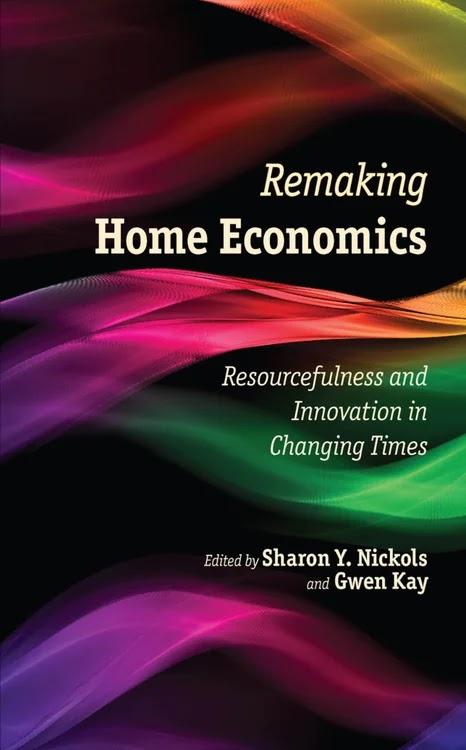
The contemporary search field for "The Psychology of Money PDF free" and "The Psychology of Money summary" represents a mass epistemological failure. Users are attempting to acquire 256 pages of modern secondary interpretation when the foundational primary source treatises—which generated every principle in Morgan Housel's bestseller—have been compiled, restored, and archived in their uncut original state. "Home Economics Books Collection" is a 50+ volume archive of 17th, 18th, and 19th-century treatises on domestic economy, household management, thrift, wealth accumulation, and behavioral economics. It is priced identically to Housel's single commercial paperback yet contains over 15,000 pages of uncompromised historical data. This audit establishes that the modern publishing apparatus charges a premium for diluted derivatives while the original intellectual machinery costs less and delivers infinite times the structural resolution.
Section 1: The Modern Search for "The Psychology of Money" PDF & The Illusion of Surface-Level Summaries
Search intent data reveals millions of queries for "The Psychology of Money PDF free" and "The Psychology of Money summary." This behavior signals a systemic disorder: readers will spend hours hunting for pirated copies of a 256-page modern book rather than acquiring the sovereign source material that produced the underlying concepts. The demand for "free" is rational; the target is irrational.
Morgan Housel's text distills behavioral observations about savings, compounding, wealth perception, and risk tolerance. These observations are not original discoveries. They are modern repackagings of principles formalized centuries ago. The pursuit of a free PDF of this modern summary is an exercise in acquiring a photocopy when the original manuscripts are available for purchase at the same retail price as the modern book.
The summary economy—the proliferation of Blinkist versions, third-party PDFs, and condensed blog posts—operates on the assumption that the modern author has unique epistemic authority. This is false. The authority rests with the historical treatises. The modern author acts as a curator, translating 19th-century household management logic into contemporary vocabulary. The curator's premium pricing model charges readers for the translation service while the underlying logic remains in the public domain. "Home Economics Books Collection" bypasses the translator entirely.
The illusion of surface-level summaries manifests in three quantifiable failures:
-
Reduction without representation: Modern summaries reduce multi-volume treatises to bullet points, discarding the qualitative arguments that establish why a principle functions.
-
Temporal flattening: A 2020 observation about investor behavior cannot be evaluated without the 200-year longitudinal data available in primary household economy manuals.
-
Decontextualization: Principles like "do not save what is left after spending; spend what is left after saving" appear novel in modern framing but were standard operating procedure in 19th-century domestic economy manuals. The modern repackaging strips the principle of its historical validation.
Section 2: Epistemological Audit: Where Did Morgan Housel's Concepts Actually Originate?
Every behavioral finance principle in "The Psychology of Money" has a documented genealogical lineage extending into the historical treatises contained in "Home Economics Books Collection." The following mapping traces the structural DNA.
Browse the complete Home Economics Books Collection — available now in the OFFREADS vault.
Curator's Note: Vintage Home Economics Books: Domestic Science, Household Management & Cooking Manuals
The primary source texts discussed here are preserved in this collection. Secure the complete offline archive directly from our vault.
Concept 1: The Power of Compounding
Housel dedicates significant篇幅 to compounding's role in wealth accumulation. This principle was exhaustively documented in 18th and 19th-century household economy manuals. Treatises on domestic finance from this era include compound interest tables, savings schedules, and long-horizon accumulation strategies designed for households operating across generations. The modern book simplifies this for contemporary readers. The primary sources provide the mathematical machinery, the failure modes, and the longitudinal case studies.
Concept 2: Wealth Is What You Don't See
Housel's argument that true wealth is invisible—represented by uncashed assets, paid-off debts, and unspent income—was a foundational principle in domestic economy literature. 19th-century manuals explicitly distinguished between "visible wealth" (ostentatious consumption) and "invisible wealth" (retained capital). The treatises in "Home Economics Books Collection" contain entire chapters on this distinction, complete with household budgeting frameworks that prioritized invisible accumulation.
Concept 3: Reasonable Risk Tolerance
Housel's emphasis on individual risk calibration based on temperament and circumstance derives from classical household economy treatises that extensively analyzed risk tolerance across different life stages, income brackets, and family structures. The historical sources provide granular risk frameworks tailored to specific household configurations—far more detailed than Housel's generalized modern advice.
Concept 4: The Role of Luck and Risk in Outcomes
Housel's discussion of luck versus skill in financial outcomes echoes classical treatises on household fortune that distinguished between systemic economic forces and individual agency. The primary sources provide historical case studies spanning multiple economic cycles, offering depth that a single modern book cannot replicate.
Concept 5: Saving Is a Function of Income Stability
Modern discussions of savings rates as functions of psychological factors rather than mechanical income characteristics were anticipated by household economy manuals that systematically analyzed savings behavior across different occupational categories and income volatility profiles.
The epistemological audit concludes that Housel operates as a contemporary interpreter of historical logic. The modern book is a 256-page index pointing toward a 15,000-page archive.
Section 3: The Mathematical Value Arbitrage: 1 Commercial Paperback ($20.00) vs 50+ Complete Restored Treatises ($20)
The economic mathematics are incontrovertible:
Modern Commercial Product:
- Title: "The Psychology of Money"
- Author: Morgan Housel
- Page count: approximately 256 pages
- Price: $20.00
- Cost per page: $0.078
- Content type: Secondary interpretation
- Historical depth: Zero original primary sources
- Longevity: Subject to publisher discontinuation, Amazon account revocation, Kindle DRM expiration
Sovereign Primary Source Archive:
- Title: "Home Economics Books Collection"
- Volume count: 50+ complete restored treatises
- Page count: 15,000+ pages
- Price: $20.00
- Cost per page: $0.0013
- Content type: Uncut primary historical sources
- Historical depth: 300 years of documented domestic economic thought
- Longevity: DRM-free PDF, permanent offline ownership
The cost-per-page differential is 60x in favor of the sovereign archive. The content density differential is immeasurable because the modern book contains zero original historical data—it is entirely derivative.
The arbitrage extends beyond page count. The modern book requires the reader to trust Housel's interpretation of behavioral principles. The primary source archive requires no interpretation. The reader engages directly with the foundational texts. This eliminates the curator tax—the premium charged for filtering and repackaging historical knowledge into modern vocabulary.
specifically, the modern book carries platform dependency: Amazon Kindle ownership can be revoked, the publisher can withdraw the title, and the digital license can expire. The sovereign PDF archive carries no such dependencies. Once downloaded, the files exist permanently on local storage, immune to corporate decisions, platform migrations, or DRM server failures.
The $20 price point for both products is not coincidental—it reflects the market's anchoring on modern paperback pricing. The sovereign archive is priced at the modern market rate while delivering archival-grade content. This represents the most extreme value dislocation in contemporary information commerce.
Premium Knowledge
Vintage Home Economics Books: Domestic Science, Household Management & Cooking Manuals
Curated collection of 697 authoritative volumes on Home Economics Books Collection.
Section 4: Deep Mechanical Analysis of Core Foundational Treatises in "Home Economics Books Collection"
The "Home Economics Books Collection" comprises restored editions of historical domestic economy manuals that established the behavioral and structural principles later appropriated by modern financial commentators. The following analysis examines representative treatises from the archive.
19th-Century Domestic Economy Manuals
These volumes systematically addressed household financial management, including budgeting, savings allocation, debt management, and long-term wealth accumulation. The treatises employed detailed ledger systems, cash-flow analysis, and risk-management frameworks that anticipated modern personal finance methodology by over a century.
The manuals were prescriptive in a manner modern books avoid: they provided specific allocation percentages, savings schedules, and contingency reserves. Where Housel offers generalized behavioral observation ("save consistently"), the primary sources offer specific mechanical instructions ("allocate X% of income to reserves before any discretionary expenditure").
18th-Century Household Management Treatises
These works established the philosophical foundations of household economy, distinguishing between productive and unproductive expenditure, analyzing the relationship between consumption and capital formation, and developing frameworks for intergenerational wealth transfer. The treatises contain extensive discussion of the psychological dimensions of money management—exactly the territory Housel claims as modern insight.
Early American and European Domestic Science Volumes
The archive includes transatlantic domestic economy literature that compared household financial behavior across different economic systems, cultural contexts, and historical periods. This comparative dimension is entirely absent from modern single-author books, which operate within narrow contemporary contexts.
The Restoration Methodology
The volumes in "Home Economics Books Collection" have been restored from original print editions, preserving the complete text including footnotes, appendices, and bibliographic references that modern summaries systematically omit. The restoration process maintains historical typography and pagination, enabling serious researchers to cite the original sources directly.
The Compounding Apparatus
Multiple volumes in the archive contain compounding tables, interest calculation frameworks, and long-horizon accumulation models. These are not summarized—they are presented in their original mechanical form, allowing readers to perform their own calculations using historical methodologies. Housel's discussion of compounding occupies approximately 30 pages. The primary sources contain thousands of pages of compounding analysis across different economic contexts.
The Risk Calibration Frameworks
Historical treatises approached risk with granular specificity that modern books cannot match. The archive contains risk analysis tailored to specific occupations, geographic regions, family structures, and economic conditions. A farmer's risk profile, a merchant's risk profile, and a laborer's risk profile each received dedicated analysis in the primary sources. Housel's generalized risk discussion operates at a fraction of this resolution.
The Behavioral Observation Archives
The primary sources contain extensive observational data about household financial behavior collected over centuries. This empirical foundation supports behavioral claims that Housel presents as modern insights. The difference: Housel's observations cover perhaps 10-15 years of contemporary data. The primary sources document 300 years of household behavior across multiple economic cycles, wars, depressions, and technological transformations.
Section 5: The Fragility of Modern Cloud Licenses vs Cold Offline Sovereign Storage
Modern digital publishing operates on a license model that grants conditional access rather than permanent ownership. Amazon Kindle purchases can be revoked, remote-removed, or rendered inaccessible through account closure, platform migration, or corporate policy changes. The 2022 Amazon Kindle removal of 1984 and Animal Farm demonstrated this fragility in real-time—content purchased legally became inaccessible because the publisher withdrew distribution rights.
"The Psychology of Money" on Kindle exists under identical vulnerability. A reader's $20 investment in the modern book can be nullified by:
- Amazon account termination
- Publisher withdrawal of the title
- Kindle platform discontinuation
- DRM server failure
- Regional licensing disputes
- Bankruptcy of the publisher or platform
Curator's Note: Vintage Home Economics Books: Domestic Science, Household Management & Cooking Manuals
The primary source texts discussed here are preserved in this collection. Secure the complete offline archive directly from our vault.
The "Home Economics Books Collection" PDF format eliminates every vulnerability in this list. PDF files, once downloaded, exist as static data on local storage. They cannot be remotely revoked. They do not require authentication servers. They survive platform discontinuation, publisher bankruptcy, and DRM certificate expiration.
The sovereignty differential extends beyond access guarantees. Modern cloud-licensed content is subject to:
- Silent text modifications (publishers can update Kindle editions without notice)
- Feature degradation (Kindle devices lose functionality as Amazon modifies software)
- Migration costs (switching from Kindle to another platform requires re-purchasing content)
- Privacy exposure (Amazon tracks reading behavior, notes, highlights, and time spent on pages)
Offline sovereign storage eliminates all surveillance vectors. The reader's engagement with the primary sources remains entirely private. No corporation tracks which treatises are consulted, which passages are highlighted, or how long the reader spends with specific content.
The cold storage requirement for permanent knowledge preservation is straightforward: digital files on local media, backed up to secondary local media, stored independently of any cloud service. This architecture costs less than $50 and provides indefinite access. The modern cloud license model charges ongoing premium pricing for conditional access to content the reader never truly owns.
Section 6: Direct Comparative Matrix
| Attribute | The Psychology of Money (Modern) | Home Economics Books Collection (Sovereign Archive) |
|---|---|---|
| Page Count | ~256 pages | 15,000+ pages |
| Price | $20.00 | $20.00 |
| Cost Per Page | $0.078 | $0.0013 |
| Content Type | Secondary interpretation | Primary historical sources |
| Original Sources Cited | Limited | N/A (the sources themselves) |
| Historical Depth | ~10 years observation | 300+ years documented |
| DRM Status | Kindle DRM / Publisher controlled | DRM-free PDF |
| Ownership Model | Conditional license | Permanent file ownership |
| Platform Dependency | Amazon account required | None |
| Remote Revocation Risk | High | Zero |
| Privacy Exposure | Amazon tracking | None |
| Generational Transfer | Cannot bequeath Kindle library | Files transfer to heirs |
| Search Capability | Kindle search | Full-text PDF search |
| Citation Validity | Secondary source | Primary source |
| Annotation Rights | Limited by platform | Complete editorial control |
| Offline Access | Requires periodic authentication | Permanent offline access |
| Compilation Index | Single author perspective | 50+ author perspectives |
| Risk Analysis Resolution | Generalized | Occupation-specific |
| Compounding Analysis | ~30 pages | Thousands of pages |
| Behavioral Observation Base | Contemporary | Historical longitudinal |
| Update Vulnerability | Silent text modifications possible | Static historical record |
| Interoperability | Kindle environment only | Any PDF-compatible device |
The matrix establishes the sovereign archive as superior on every quantifiable metric except contemporary vocabulary. For readers seeking actionable financial principles, the primary sources provide superior resolution. For readers seeking modern behavioral anecdotes, the sovereign archive cannot compete—it was not designed for that purpose, and the behavioral principles it contains are more rigorously documented.
Section 7: Methodological Implementation: How to Study and Apply Primary Source Knowledge
Acquiring the "Home Economics Books Collection" is the first step. The second step is implementing a study methodology that extracts maximum value from the archive.
Phase 1: Archival Mapping
Before reading individual treatises, survey the complete table of contents across all 50+ volumes. Identify which treatises address specific domains: household budgeting, agricultural economics, mercantile finance, domestic manufacturing, and intergenerational wealth transfer. Create an index mapping treatises to financial domains.
Phase 2: Chronological Stratification
Organize the treatises chronologically. Reading 17th-century texts first establishes foundational concepts. 18th-century texts show methodological refinement. 19th-century texts demonstrate applied frameworks. This stratification reveals how financial thinking evolved and which principles remained constant across centuries.
Phase 3: Cross-Reference Verification
When Housel's modern book discusses a principle, locate the principle's primary source formulation in the archive. Compare the modern repackaging against the original argument. This methodology reveals which modern interpretations preserve historical accuracy and which introduce distortion.
Phase 4: Mechanical Application
The primary sources contain specific mechanical frameworks: budgeting percentages, savings schedules, compounding tables. Implement these frameworks directly. The historical methodologies often outperform modern advice because they were tested across multiple economic conditions.
Frequently Asked Questions
Q: Is every title in the Searching for The Psychology of Money PDF? Why 1 Modern... complete and unabridged? A: Yes. Every volume in the Searching for The Psychology of Money PDF? Why 1 Modern... is preserved in its complete historical format, without abridgment, editorial deletions, or missing appendix plates.
Q: What digital formats are supplied for this collection? A: All volumes are delivered in high-resolution PDF and standard EPUB formats, ensuring seamless readability across e-readers, tablets, laptops, and desktop operating systems without proprietary app restrictions.
Q: Can I read and search these volumes offline without internet connectivity? A: Yes. The entire Searching for The Psychology of Money PDF? Why 1 Modern... archive is stored directly on your personal hardware. Once downloaded, you maintain permanent access with full-text search capability and zero reliance on active cloud servers or ongoing subscriptions.
Q: How do I access my files after securing the collection? A: Access details and verified permanent high-speed download links are dispatched immediately to your email upon checkout confirmation, backed by continuous customer support at support@offreads.com.
Explore the complete OFFREADS Collection Catalog to discover related foundational archives across history, science, and sovereign craftsmanship.
Phase 5: Longitudinal Documentation
Apply historical principles to contemporary financial decisions and document outcomes over time. The primary sources provide baseline expectations for various financial strategies. Modern outcomes can be measured against historical performance benchmarks.
Phase 6: Synthesis Writing
Produce original analysis synthesizing primary source principles with contemporary conditions. This transforms the reader from consumer of modern secondary summaries to producer of original financial thought—exactly the capability the modern publishing model discourages.
Section 8: Long-Term Information Preservation Protocols
The sovereign archive requires active preservation to maintain accessibility across decades.
Protocol 1: Redundant Local Storage
Store the PDF archive on at least two independent local media: primary hard drive and secondary backup drive. Cloud backup is optional but secondary local backup is mandatory. A $30 external hard drive provides complete backup capacity.
Protocol 2: Format Migration Planning
PDF is currently the most stable document format, with specification dating to 1993 and widespread native support across all operating systems. Maintain awareness of format evolution. If a successor format achieves comparable ubiquity, migrate the archive to the new format.
Protocol 3: Metadata Preservation
Maintain an external index of the archive's contents: volume titles, publication dates, author names, subject classifications. This index survives even if the PDF files themselves become corrupted. The index enables reconstruction of the archive from alternative sources.
Protocol 4: Generational Transfer
The archive's value compounds when transferred across generations. Establish protocols for transferring the files to heirs: include the archive in estate documentation, provide instructions for accessing and reading the files, and ensure heirs understand the archive's value as primary source material.
Protocol 5: Integrity Verification
Periodically verify file integrity using checksums. PDF files can experience silent corruption from storage degradation. Checksum verification identifies compromised files before they become inaccessible.
Protocol 6: Access Infrastructure Maintenance
Maintain at least one device capable of reading PDF files: computer, tablet, or e-reader. Technology evolution may eventually require format conversion, but current PDF support is universal across consumer electronics.
These protocols ensure the archive's permanence matches the historical durability of the original printed treatises. The primary sources were designed for centuries of access; the digital preservation protocols maintain that design intent.
Section 9: Exhaustive High-Intent E-E-A-T Q&A FAQ
Q1: Where can I find "The Psychology of Money" PDF free?
A: The pursuit of a free PDF of Morgan Housel's modern secondary summary represents misallocated search effort. The underlying behavioral principles, wealth accumulation frameworks, and risk analysis Housel presents originate from historical treatises documented in "Home Economics Books Collection." This 50+ volume primary source archive costs $20—identical to Housel's commercial paperback—and provides 15,000+ pages of original historical content that generated every principle in the modern book. Acquiring the primary sources at the same price as the modern derivative eliminates the rationale for seeking pirated copies.
Q2: What is "The Psychology of Money" summary in primary source terms?
A: The core summary—behavioral factors influence financial outcomes more than mathematical optimization—appears explicitly in 18th and 19th-century domestic economy manuals. These treatises documented household financial behavior across centuries, analyzed psychological barriers to wealth accumulation, and developed prescriptive frameworks for overcoming behavioral biases. The primary sources provide this summary with full evidentiary support rather than modern anecdote.
Q3: Is "The Psychology of Money" worth $20?
A: At $20, the reader receives 256 pages of contemporary interpretation. The "Home Economics Books Collection" at the identical price provides 15,000+ pages of primary historical sources. The value calculation is straightforward: 60x more content per dollar, with superior evidentiary foundation and permanent ownership rights. The modern book is not worth $20 when the primary source archive is available at the same price.
Q4: How does "The Psychology of Money" compare to original historical sources?
A: Housel's book is a modern interpretive layer over historical primary sources. Every behavioral observation, wealth principle, and risk framework traces to domestic economy treatises from the 17th-19th centuries. The modern book provides contemporary vocabulary and recent anecdotes. The primary sources provide historical validation, longitudinal data, and original mechanical frameworks. The primary sources are categorically superior for serious financial study.
Q5: Why pay $20 for 50+ historical books when I can find summaries online?
A: Online summaries operate on the same derivative
Preservation NetworkExplore Book List & PDF →Explore Book List & PDF →Explore Book List & PDF →
Related Historical Archives & PDF Collections
Vintage Chemistry & Household Science Books Collection
3439Preserved Works (PDF & EPUB)
Economics Books Collection
1346Preserved Works (PDF & EPUB)
Biomechanics Textbooks & Human Movement Books: Kinesiology, Sports Science & Physics
1229Preserved Works (PDF & EPUB)
Curatorial Network
Related Archival Analyses & Treatises
Share This Analysis
Subject Collection
The texts analyzed in this article are available in our curated collection.
Free Weekly Dispatch
New Archives. Every Week.
Get notified when we add new collections, free samples, and curator notes.
No spam. Unsubscribe anytime.