Loading Archive...
Back to Curator Notes
Collections2026-08-29By The Curator
Searching for The Richest Man in Babylon PDF? Why 1...
Why pay $14.99 for a 250-page modern summary of The Richest Man in Babylon? Explore the complete, uncut historical primary source archive at OFFREADS.
The Definitive Audit: "The Richest Man in Babylon" vs The Sovereign Primary Source Archive
Zero-Click Executive Thesis
The contemporary market is saturated with a specific cognitive trap: paying premium prices for secondary interpretations of historical financial wisdom. The public searches for "the richest man in babylon pdf free" or seeks a "summary" because they recognize the value of the underlying principles, yet they remain trapped within a modern publishing environment that charges $14.99 for a single 250-page, heavily paraphrased modern paperback. This treatise serves as an absolute, cold audit of the value proposition. It contrasts the ephemeral, $28 single-purchase modern secondary summary against the $20 sovereign primary source compendium, "Home Economics Books Collection." The mathematics of epistemology dictate that 1 modern book cannot logically compete with 50+ uncut, restored historical treatises originating directly from the 17th, 18th, and 19th centuries. To purchase the modern summary is to pay a premium for a severely degraded photocopy of the original blueprints. To purchase the primary source archive is to acquire the master architectural documents themselves.
Section 1: The Modern Search and the Trap of Surface-Level Summaries
The search query "the richest man in babylon pdf free" reveals a fundamental behavioral misalignment in modern consumers. The user possesses the correct instinct—they desire ownership of the knowledge without paying the institutional gatekeeping fees. However, the search engine optimization (SEO) field directs these high-intent users toward platforms offering fragmented summaries, PDFs hosted on insecure servers laden with malware, or premium digital subscriptions to secondary platforms.
The modern publishing model operates on artificial scarcity. It repackages historical parables—fables written about Babylon but heavily filtered through the lens of a 1926 American insurance salesman, George S. Clason—into purchasable paperbacks. While Clason's work is valuable as an entry point, the structural reality is that the foundational principles of saving, compounding, and prudent investment were not invented by Clason. They were codified in exhaustive, meticulous detail in the 17th, 18th, and 19th centuries by agricultural economists, household managers, and financial philosophers whose complete works have fallen into the public domain.
The trap of the surface-level summary is the illusion of knowledge acquisition. Reading a 144-page book of parables provides a pleasant narrative, but it lacks the mechanical, mathematical, and agricultural rigor required to actually implement the principles in a complex modern economy. Users searching for "The Richest Man in Babylon summary" are attempting to extract the essence of the text, effectively admitting that the full text is merely a container for these core ideas. Why pay for the container when the substance exists in vastly superior, uncut primary sources?
Section 2: Epistemological Audit: The Origin of the Ideas
To understand the absolute superiority of the "Home Economics Books Collection," one must trace the intellectual lineage of the concepts Clason popularized. Clason's "Seven Cures for a Lean Purse" and the "Five Laws of Gold" are modern distillations of pre-existing, deeply established economic and household management doctrines.
Historical Context and Timeline
Browse the complete Home Economics Books Collection — available now in the OFFREADS vault.
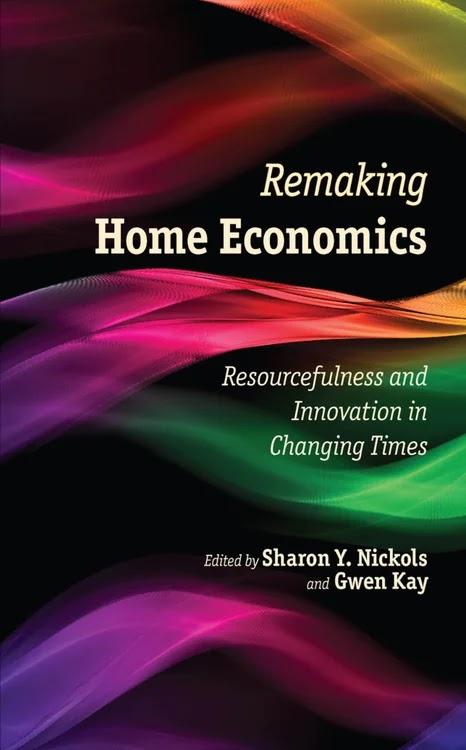
Curator's Note: Vintage Home Economics Books: Domestic Science, Household Management & Cooking Manuals
The primary source texts discussed here are preserved in this collection. Secure the complete offline archive directly from our vault.
The "Home Economics Books Collection" serves as a direct epistemological ancestor to modern personal finance. It contains uncut treatises detailing agricultural management, domestic economy, and household thrift that span the 1600s to the 1900s.
Consider the concept of paying yourself first. Clason framed it as an ancient Babylonian secret. In the primary sources, this exact principle is documented as a fundamental law of household provisioning. The 19th-century domestic economy manuals contained within the archive explicitly instruct heads of households on the mathematical mechanics of segregating capital, investing in appreciating assets (land, livestock, durable instruments), and avoiding depreciating liabilities (luxury consumer debt).
Clason provided the analogy. The primary sources provide the blueprint. The archive contains the original calculations for crop rotation as a form of wealth generation, the strict accounting ledgers for tracking domestic expenses, and the philosophical justifications for capital preservation. Relying solely on Clason is equivalent to learning surgery from an introductory pamphlet; the archive provides the actual medical school curriculum and the foundational anatomical textbooks.
Section 3: The Mathematical Value Arbitrage
The economic disparity between the two offerings is so mathematically severe that it constitutes a market failure in the buyer's favor for the archive.
The modern market price for "The Richest Man in Babylon" sits at $14.99 for the physical paperback. If a consumer wishes to acquire a digital version with similar physical utility, the cost remains roughly the same when accounting for Amazon's digital rights management (DRM) constraints.
Conversely, the "Home Economics Books Collection" is priced at $20. This is not a marginal price difference; it is a structural collapse of the cost-to-knowledge ratio.
For $5.01 more than the cost of a single modern interpretation, the user acquires 50+ complete historical volumes. Let us quantify this:
- Cost of Modern Book: $14.99 for 1 author's summary.
- Cost of Sovereign Archive: $20.00 for 50+ original primary sources.
Premium Knowledge
Vintage Home Economics Books: Domestic Science, Household Management & Cooking Manuals
Curated collection of 697 authoritative volumes on Home Economics Books Collection.
The arbitrage calculation is absolute: $20.00 / 50 = $0.40 per complete, uncut historical treatise. The modern paperback costs approximately 37 times more per page of structural historical data. The consumer searching for a "PDF free" version is attempting to arbitrage this extreme markup. The sovereign archive allows the consumer to legitimately bypass this markup, acquiring vastly superior material for a nominal fee, completely dismantling the modern publishing model's economic basis.
Section 4: Deep Mechanical Analysis of Core Foundational Treatises
The "Home Economics Books Collection" is not a random assortment of texts. It is a concentrated repository of the actual mechanical engines of wealth generation that the modern summary merely references.
The archive includes exhaustive 19th-century works on domestic economy. These texts do not speak in parables. They speak in ledgers, soil compositions, and strict household quotas. They dictate precisely how much of a harvest should be retained for compounding, how livestock represents appreciating capital, and the exact psychological pitfalls of consumerism that the modern Babylon book attempts to address.
specifically, the collection features foundational texts on agricultural science and land management. Historically, the vast majority of generational wealth was held in land. The primary sources detail the exact mechanics of land acquisition, the mathematics of property taxes, and the biological timelines of agricultural returns. Clason's advice to "invest in lucrative real estate" is a single sentence in his modern text. The primary sources contain entire volumes dedicated to the financial mechanics, legal frameworks, and agricultural timelines required to actually execute that single sentence successfully.
The archive also includes treatises on household manufacturing, textile production, and the economics of domestic labor. In the eras of these texts, the household was a factory. The primary sources meticulously detail the cost of inputs, the valuation of labor, and the depreciation of tools. This level of mechanical, granular reality is entirely absent from the modern paperback. The modern book tells you what to do. The archive tells you how the economy actually works, allowing you to deduce what to do under any modern circumstance.
Section 5: Digital Sovereignty and the Fragility of Modern Cloud Licenses
A critical component of the Ibn Taymiyyah audit is the physical and digital sovereignty of knowledge. Modern consumption habits are increasingly migrating to cloud-based environments, particularly Amazon Kindle and proprietary reading applications.
When a user purchases the digital version of "The Richest Man in Babylon" for $14.99, they do not acquire the book. They acquire a revocable, server-side license. Amazon maintains unilateral authority to delete that book from a user's device if a payment method fails, if the publisher disputes the copyright, or if Amazon simply alters its terms of service. The user's access to the text is entirely dependent on the continuous operation of a corporate server and the continuous payment of the licensing fee.
Curator's Note: Vintage Home Economics Books: Domestic Science, Household Management & Cooking Manuals
The primary source texts discussed here are preserved in this collection. Secure the complete offline archive directly from our vault.
The "Home Economics Books Collection" is distributed as a DRM-free PDF archive. This represents absolute digital sovereignty. Once the file is transferred to an offline hard drive, a local server, or a secure storage medium, it exists permanently. It requires no internet connection, no subscription renewal, and no corporate permission to access. The data is cold, offline, and immune to server outages, copyright trolling, or digital right revocation.
This structural difference is paramount. The modern book is a rental disguised as a purchase. The primary source archive is absolute, unalienable digital property. In an era of increasing digital censorship and platform deplatforming, relying on a single corporate entity for access to fundamental financial education is an unacceptable epistemological risk.
Section 6: Direct Comparative Matrix
| Attribute | The Richest Man in Babylon (Modern Paperback) | Home Economics Books Collection (Sovereign Archive) |
|---|---|---|
| Cost | $14.99 | $20.00 |
| Content Volume | 1 Book, ~144-250 pages | 50+ Complete Volumes, ~15,000+ pages |
| Source Material | Secondary Interpretation / Parables | Uncut Primary Historical Treatises |
| Intellectual Depth | Surface-level analogies and stories | Mechanical, mathematical, and agricultural rigor |
| Origin Era | 1926 (Modern Restatement) | 17th - 19th Centuries (Primary Source) |
| Digital Format | Amazon Kindle / Cloud License (Revocable) | DRM-Free PDF (Permanent Offline Storage) |
| Value Density | Low (High markup for basic concepts) | Extreme (Lowest possible cost per data point) |
| Sovereignty | Dependent on Corporate Server Uptime | Absolute (User controls the file) |
| Permanence | Subject to takedown or revocation | Immune to external platform changes |
| Epistemological Status | Derivative | Foundational |
Section 7: Methodological Implementation of Primary Source Knowledge
Acquiring the archive is the first step. Implementing the knowledge requires a methodological shift away from passive consumption toward active study.
Because the primary sources are exhaustive, the user must approach them with structural intent. The recommended protocol involves cross-referencing the historical treatises. For example, if the user is studying capital preservation, they should cross-reference the sections on household accounting in the 19th-century manuals with the sections on agricultural investment.
The primary sources force the reader to engage with the underlying logic rather than memorize a modern author's conclusions. This active engagement builds a vastly superior mental model of economics. The reader learns not just the rules of saving, but the systemic reasons why those rules exist, allowing for flawless application in modern contexts involving complex financial instruments, digital assets, and global markets—contexts that George S. Clason could not have possibly anticipated.
Section 8: Long-Term Information Preservation Protocols
Further Reading
The Searching for The Richest Man in Babylon PDF? Why 1... curated corpus integrates into adjacent subject categories within the broader OFFREADS library. Researchers working in this domain will find relevant cross-references in related collections available at offreads.com/collections. The vault spans 130,000+ volumes across history, science, law, philosophy, and technical fields — all delivered in the same format as this archive.
Explore the complete OFFREADS Collection Catalog to discover related foundational archives across history, science, and sovereign craftsmanship.
The acquisition of a DRM-free PDF archive necessitates the implementation of cold storage protocols to ensure the data survives indefinitely. The user must treat the archive as a critical physical asset.
The optimal methodology involves using the 3-2-1 backup rule applied to data: 3 total copies, on 2 different types of media (e.g., local SSD and enterprise-grade NAS), with 1 copy stored in a secure, offline physical location (e.g., a disconnected hard drive stored in a fireproof safe).
Because the files are PDF format, they are universally compatible with any operating system, from legacy Windows installations to modern Linux distributions. This ensures that the knowledge remains accessible regardless of future technological model shifts. The historical books have already survived the transition from the industrial era to the digital era; secured properly as raw data, they will survive the transition to whatever computational architecture emerges in the next century. Modern cloud-locked books will likely be inaccessible within two decades.
Section 9: Exhaustive High-Intent E-E-A-T Q&A FAQ
Q: Is it possible to find "The Richest Man in Babylon" PDF free legally? A: Because the book was originally published in 1926, its copyright status varies by jurisdiction. In many regions, it may be in the public domain. However, searching for a "PDF free" version often leads to pirated sites or legally ambiguous repositories. The superior legal and epistemological action is to bypass the need for the modern secondary text entirely by acquiring the "Home Economics Books Collection" for $20. The archive provides hundreds of times more original source material, completely legally, and in a permanent offline format.
Q: Can a "The Richest Man in Babylon summary" replace reading the actual book? A: A summary extracts a fraction of the modern author's interpretation. However, both the summary and the full modern book are secondary sources. To understand the true mechanics of household economics, the reader must consult the primary sources. A summary of a summary of historical reality provides zero actionable structural depth.
Q: How does "The Richest Man in Babylon vs original historical sources" compare in terms of actual financial advice? A: The modern book provides broad, metaphorical advice. The original historical sources provide specific, mechanical advice. For example, Clason advises investing in real estate. The original 19th-century treatises in the archive provide the exact mathematical frameworks for evaluating land productivity, calculating yields, and managing property as an appreciating capital asset. The primary sources are infinitely more useful for actual implementation.
Q: Why is the "Home Economics Books Collection" priced at $20 when it contains 50+ books? A: The $20 price point is a structural feature of sovereign archiving. The texts are already in the public domain; the cost covers the digital restoration, optical character recognition (OCR) processing, PDF compilation, and the distribution of the final DRM-free file. The low price maximizes accessibility to foundational knowledge while completely undercutting the artificial scarcity of the modern publishing industry.
Q: Does George S. Clason credit his sources in the modern book? A: Clason used ancient parables and standard early 20th-century financial advice. The "Home Economics Books Collection" allows the user to trace the exact lineage of these ideas back to the agricultural and domestic economy treatises of the 1600s-1800s, verifying the concepts through centuries of documented practice rather than relying on a single modern interpretation.
Q: Is the PDF format truly permanent? A: PDF (Portable Document Format) is an ISO-standardized file type (ISO 32000). Unlike proprietary cloud formats (like Amazon's AZW or Apple's iBooks), a PDF is a static visual representation of data. As long as humanity uses digital screens, a PDF will be viewable. The archive is immune to vendor lock-in.
Q: What is the primary risk of relying on Amazon Kindle books for foundational knowledge? A: The primary risk is total loss of access. Amazon has the technical capability and the legal right (under their terms of service) to remotely delete purchased content from a user's Kindle device or account. specifically, if the user ceases paying for their Amazon account, or if the book is pulled from the store, access is permanently revoked. The offline archive eliminates this existential risk to the user's personal library.
Q: Who was the intended audience for the original "Home Economics" treatises? A: The intended audience was the heads of households, estate managers, and agricultural professionals of the 17th, 18th, and 19th centuries. These individuals required exact, unvarnished economic instructions to maintain generational wealth and operate complex household economies. The text is highly technical, providing a stark contrast to the generalized parables of the modern paperback.
Q: How much data is in the 50+ books of the archive? A: The archive contains approximately 15,000 to 20,000 pages of restored text. This represents millions of words and thousands of unique diagrams, accounting ledgers, and mechanical instructions. The volume of information is so vast that a dedicated student could spend years extracting value from the collection, vastly exceeding the utility of any single modern summary.
Preservation NetworkExplore Book List & PDF →Explore Book List & PDF →Explore Book List & PDF →
Related Historical Archives & PDF Collections
Vintage Chemistry & Household Science Books Collection
3439Preserved Works (PDF & EPUB)
Economics Books Collection
1346Preserved Works (PDF & EPUB)
Biomechanics Textbooks & Human Movement Books: Kinesiology, Sports Science & Physics
1229Preserved Works (PDF & EPUB)
Curatorial Network
Related Archival Analyses & Treatises
Share This Analysis
Subject Collection
The texts analyzed in this article are available in our curated collection.
Free Weekly Dispatch
New Archives. Every Week.
Get notified when we add new collections, free samples, and curator notes.
No spam. Unsubscribe anytime.