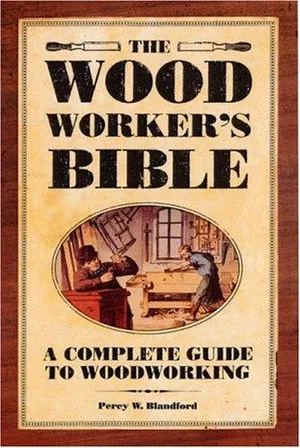
The Absolute Necessity of the Master Wood Furniture Making: Historical Woodworking Guides
A definitive breakdown of why the Master Wood Furniture Making: Historical Woodworking Guides is a required asset, debunking the myth of online permanence.
The Fallacy of Modern Woodworking Knowledge
The modern woodworker operates under a dangerous delusion. They believe that a fragmented internet search is a substitute for a structured curriculum. This is a categorical error.
Curator's Note: Master Wood Furniture Making: Historical Woodworking Guides
The texts discussed here are part of a curated collection. You can access the complete set of primary sources directly from our vault.
Information found via search engines is non-linear, unverified, and lacks technical depth. It is a collection of anecdotes, not a foundation of mastery. To build furniture that survives generations, one cannot rely on the whims of a social media algorithm.
True mastery requires a systematic approach to geometry, material science, and historical aesthetics. You are either a practitioner of transient trends or a master of enduring craft. There is no middle ground.
The Binary of Craftsmanship: Amateur vs. Master
To understand the necessity of historical treatises, we must classify the woodworker into two distinct categories.
The Uninformed Amateur
The amateur relies on "hacks" and "tips." They prioritize speed over structural integrity. Their knowledge is shallow, covering only the most basic assembly methods. They lack the mathematical foundation to execute complex moldings or intricate carvings.
The Prepared Master
The master understands the mathematical logic behind the grain. They possess the ability to replicate historical styles with absolute precision. They do not "guess" at a profile; they execute it based on established geometric principles.
Why Fragmented Digital Content Fails the Craftsman
The internet has democratized information, but it has also diluted it. The "how-to" video era has created a generation of builders who can follow instructions but cannot think critically.
The Problem of Contextual Absence
A 60-second video can show you how to cut a dovetail. It cannot teach you the historical evolution of joinery or the structural logic of Gothic architecture. Without context, technique is merely mimicry.
The Problem of Inconsistency
Digital content is plagued by inconsistency. One creator suggests one angle; another suggests a different approach. This lack of standardization leads to error. Historical texts provide a singular, authoritative standard of excellence.
The Pillars of Historical Woodworking Mastery
The "Master Wood Furniture Making: Historical Woodworking Guides" collection is not a mere library; it is a technical blueprint. We have curated these texts to address the three pillars of fine cabinetry.
1. Geometric Precision in Ornamentation
Ornamentation is not decorative; it is structural art. To master it, one must understand the mathematical derivation of form.
- A Manual Of Gothic Moldings (1864): This text provides the definitive geometric breakdown of architectural profiles. It removes the guesswork from creating complex, historically accurate moldings.
- A Guide For Drawing The Acanthus: Mastery of the acanthus leaf requires an understanding of organic geometry. This guide provides the structural framework necessary for consistent, high-level carving.
2. Advanced Material Manipulation
Wood is a living medium. Handling it requires a deep understanding of its physical properties and how to manipulate them through specialized tools.
- A Laboratory Course In Wood-Turning: This is not a hobbyist's guide. It is a technical manual for the precise manipulation of wood on a lathe. It treats wood-turning as a rigorous discipline of physics and tool control.
- A Monograph On Wood-Carving (1903): This volume serves as the definitive authority on the intersection of tool geometry and wood fiber. It is essential for anyone moving beyond basic relief carving into high-relief mastery.

Master Wood Furniture Making: Historical Woodworking Guides
A meticulously curated archive of 161 rare and foundational texts on Wood Furniture. Worth hundreds if sourced individually, this collection preserves vital techniques and historical knowledge.
3. Aesthetic Continuity and Historical Accuracy
A master does not simply build furniture; they preserve a lineage of design.
To build in the 19th-century tradition, you must have access to 19th-century standards. These texts allow you to bypass the "modernized" versions of styles that have been stripped of their technical rigor.
Debunking the "Modern Tools" Myth
A common argument suggests that modern CNC machines and power tools render historical texts obsolete. This is a logical fallacy.
Tool vs. Principle
A CNC machine is a tool for execution, but it is not a source of intelligence. A machine can cut a shape, but it cannot design a profile. The intelligence resides in the craftsman's understanding of the design.
The Necessity of Manual Foundation
Even the most advanced digital fabrication requires a foundation in manual principles. If you do not understand the geometry of a molding, you cannot program the machine to produce it accurately. The historical texts provide the "why" that makes the "how" possible.
The Economic Reality of Specialized Knowledge
Sourcing these texts individually is an inefficient use of capital and time.
The Cost of Fragmentation
Attempting to hunt down individual copies of 19th-century monographs involves:
- High procurement costs for rare editions.
- Significant time lost to research and verification.
- The risk of acquiring incomplete or inaccurate reproductions.
The Efficiency of the Curated Collection
The "Master Wood Furniture Making" collection consolidates these essential volumes into a single, high-utility digital vault. We have eliminated the friction of acquisition. You receive the pinnacle of 19th-century craftsmanship in a format optimized for immediate technical application.
Methodological Mandate: How to Use This Collection
To derive value from these texts, you must abandon the casual reading habit. These are technical manuals, not leisure reading.
- Study the Geometry: Use the molding manuals to draft your profiles before touching wood.
- Replicate the Form: Use the carving monographs to master tool angles and grain direction.
- Verify the Standard: Use these texts as your benchmark for "correctness" when designing historical pieces.
Failure to follow this structured approach will result in the same mediocre output as the unconditioned amateur.
Conclusion: The Choice is Binary
You can continue to navigate the chaotic, unreliable landscape of modern digital tutorials. You can continue to build furniture that lacks depth, history, and structural authority.
Or, you can acquire the foundational knowledge required to join the ranks of the masters.
Why Individual Sourcing is a Strategic Error
Acquiring these texts one by one is a failure of resource management. Do not do it.
Consider the reality of the physical rare book market. A singular original copy of a classic text related to Master Wood Furniture Making Historical Woodworking Guides easily commands hundreds of dollars on Amazon or specialized antiquarian sites. You are paying for the physical decay. You are paying for the leather.
You do not need the leather. You need the data.
- Financial Inefficiency: Sourcing 19th-century manuals individually costs thousands. A single volume eclipses the cost of our entire digital archive.
- Logistical Friction: Finding specific, rare editions requires months of searching. Dead links. Out-of-stock notices.
- Incompleteness: Even after significant expenditure, you will lack the full spectrum.
Our collection eliminates these variables. We have performed the curation. We have verified the provenance. We have consolidated the data into one accessible download.
Subject Collection
The texts analyzed in this article are available in our curated collection.